Dining Out and A1C: Why Restaurant Meals Quietly Raise Your Blood Sugar (And How I Fixed It)
Like most people, I believed blood sugar was controlled mainly by food choices, exercise, and sometimes sleep, while stress or context felt secondary—something mental rather than measurable. But that assumption didn’t last long once I started seeing patterns that didn’t make sense.
At home, my numbers were stable. Outside, they weren’t.

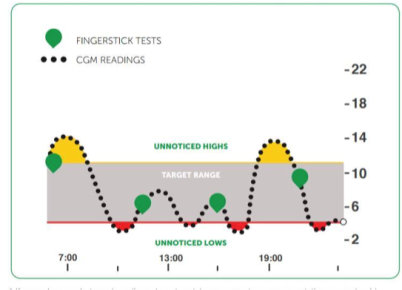
Why Dining Out Raises Blood Sugar More Than You Expect
The problem with dining out isn’t just about eating more, but about how multiple risk factors stack together at once.
Restaurant meals typically combine larger portions, hidden carbohydrates in sauces and marinades, and a structure that allows glucose to rise quickly. Because you don’t control the ingredients or preparation, the same meal that “looks balanced” can behave very differently in your body.
What makes it worse is the common habit of skipping meals earlier in the day before a dinner outing, which often leads to overeating and sharper spikes afterward.
How a Typical Business Dinner Spiked My Morning Fasting Glucose


It was a Korean-style meal—marinated grilled meat dripping with sweet sauce (like galbi), a bowl of white rice, and endless side dishes that made it feel balanced and complete.
Nothing extreme. Nothing unusual.
But about one to two hours later, I felt it—that heavy, slow fatigue that creeps in quietly and makes it harder to stay sharp, even while sitting across from a client.
The next morning told the real story.
My fasting glucose was noticeably higher than usual, and that’s when I realized this wasn’t about one meal—it was about a pattern.
Why Restaurant Meals Hit Harder Than Home Meals
Restaurant food is built for flavor, not metabolic stability.
That usually means more oil, more sugar, and more concentrated combinations of ingredients, but the real issue isn’t just the ingredients, but how the meal is structured.
Carbohydrates tend to come in quickly and in larger amounts, often without enough fiber, protein, or fat to slow down absorption, which leads to faster spikes and less stable glucose responses.
At home, meals are naturally more controlled. At restaurants, everything is optimized for taste—and that changes the outcome.
The Mistake I Made During Busy Workdays
The biggest mistake wasn’t what I ordered, but how I walked into the meal.
On busy days filled with back-to-back meetings, I often arrived overly hungry, ate too quickly, and then sat down immediately after finishing.
Sometimes, I even reached for bread or sweet drinks before the main meal arrived, which only amplified the spike that followed.
Looking back, it wasn’t just the food—it was the entire sequence.
My 3-Step Strategy to Prevent Post-Meal Spikes When Dining Out
The solution didn’t come from avoiding restaurants, but from changing the structure.
I started with a simple approach: beginning meals with protein or vegetables, leaving carbohydrates for later, avoiding sugary drinks entirely, and keeping hydration simple with water.
Then I added one more habit that made a measurable difference: a short walk after meals.
Even 10 minutes of light movement helped reduce the intensity of glucose spikes and made the overall response more stable.
What Changed After I Adjusted My Pattern
The changes weren’t dramatic overnight, but they were consistent.
Post-meal fatigue became less noticeable, sudden hunger crashes became less frequent, and my morning readings started to stabilize.
More importantly, I stopped seeing dining out as something that automatically disrupted my control and started treating it as something I could manage.
Why Dining Out Is About Structure, Not Restriction
Most people assume they need to avoid restaurants completely, but that’s not realistic.
The real key is structure.
You don’t have to remove the foods you enjoy. You just need to change how they enter your system. Once you understand that, managing post-meal glucose becomes less about restriction and more about control.
Final Thought
Dining out doesn’t ruin your A1C; repeated patterns do.
One meal won’t define your numbers, but consistent habits always will. When you shift your focus from avoiding food to managing structure, your results become more predictable—and that’s where real control begins.
Disclaimer
This content is for informational purposes only and does not replace professional medical advice. Always consult a healthcare professional for personalized guidance.


Comments
Post a Comment