Meal Order Strategy: How Eating Protein Before Carbs Lowers Postprandial Glucose Spikes by 30%

Once I understood this, it didn’t just improve my numbers. It fundamentally changed how I approached every meal.
How Meal Sequencing Lowers Postprandial Glucose Spikes by 30%
Most people focus on calories, sugar, or carbohydrates, but blood sugar is not only about what you eat—it’s about how that food enters your system.
When carbohydrates are eaten first, glucose hits the bloodstream quickly, causing a sharp spike followed by a crash. But when protein, fat, or fiber are eaten first, they slow gastric emptying and reduce the speed of glucose absorption.
This creates a completely different metabolic response, and in many cases, postprandial glucose spikes can be reduced by as much as 30%.
What My Old Eating Pattern Looked Like
Before I understood this, my eating pattern was simple: fast, convenient, and fundamentally wrong.
There was no structure and no sequence—just speed.
Between client meetings, I would grab whatever was available, usually bread or a quick snack, and eat it immediately inside the car without thinking about how it would affect my glucose.
At the time, it felt efficient. But in reality, it was building instability.
The Moment It Became Obvious
After finishing a meeting, I got into my car, threw my folder onto the passenger seat, and started eating a sandwich immediately because I didn’t have time. But about an hour later, I experienced heavy fatigue, sudden hunger, and a sharp drop in focus.
Sitting across from the next client, I felt my mind slowing down, and that wasn’t just normal tiredness—it was a blood sugar crash.
That’s when I realized something critical: it wasn’t just what I was eating, but how I was eating it.
My CGM Data Proof: Protein First vs. Carbs First
This is where theory turned into reality.
I started checking my glucose more intentionally—sometimes with a finger-prick meter between meetings, and at one point wearing a continuous glucose monitor (CGM), which allowed me to see how my body reacted in real time.
The difference was undeniable.
Eating carbohydrates first created sharp and fast spikes, while eating protein and fiber first flattened the curve and stabilized my glucose response.
It was the exact same food, but a different order produced a completely different result.
The Simple Shift That Changed Everything
I didn’t overhaul my diet.
I changed the structure.
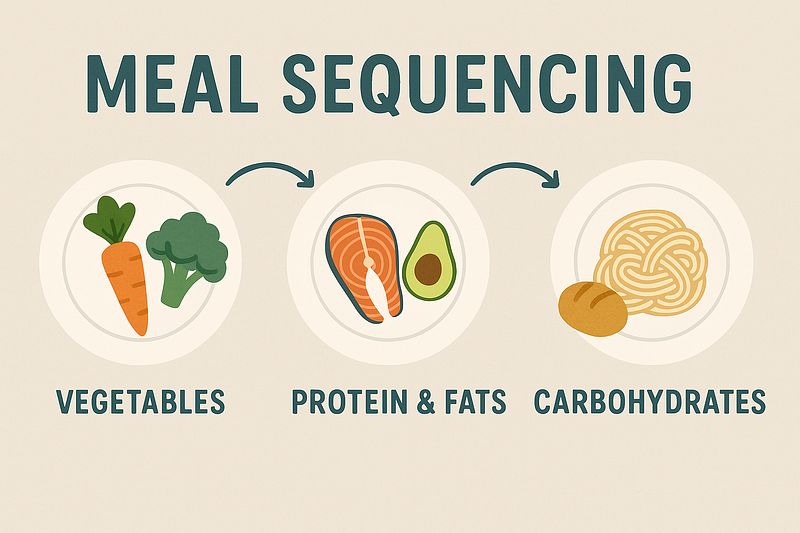
1. Vegetables or fiber first: Starting meals with fiber slowed digestion and prepared my body to handle incoming carbohydrates more efficiently.
2. Protein and fat second: Eating these next stabilized my energy and reduced hunger.
3. Carbohydrates last: Saving carbs for the end prevented sudden glucose spikes.
And this is where it became practical.
When I had to eat a sandwich in the car, I didn’t just bite into it like before. Instead, I opened it up, ate the eggs, chicken, or vegetables inside first, and then finished with the bread, effectively creating my own sequence even in a rushed situation.
That small adjustment made a measurable difference.
Why This Works in Real Life
This strategy works because it doesn’t require restriction; you don’t need to eliminate foods or follow a strict diet—you simply change how your body processes what you already eat.
And that makes it sustainable.
What Changed After Applying This
The change wasn’t dramatic overnight, but it was consistent.
My glucose spikes became smaller, my energy became more stable, and that frustrating afternoon crash gradually disappeared.
More importantly, I stopped feeling like I was constantly reacting to my blood sugar.
The Biggest Misconception About Diet and Blood Sugar
Most people think control means cutting carbs, avoiding sugar, and eating less, but that’s only part of the story.
The real solution is not restriction, but structure.
Final Thought
Meal order is one of the simplest changes you can make, but it has one of the biggest impacts, because blood sugar is not just about what you eat, but how your body processes it.
And once you understand that, control stops feeling difficult—and starts becoming automatic.
Disclaimer
This content is for informational purposes only and does not replace professional medical advice. Always consult a healthcare professional for personalized guidance.


Comments
Post a Comment