The Glucose Investor’s Lab #1: Is Oatmeal Actually a Diabetic Superfood? — My CGM Data vs. the Oatmeal Myth
Why Oatmeal Is Considered a Stable Food
Is oatmeal really good for blood sugar? I believed it was one of the safest breakfast options until I tested it myself and saw results I could not ignore.
Like most people, I accepted the common narrative without much resistance. Oatmeal is consistently recommended for glucose control; it contains fiber, digests slowly, and is often positioned as a reliable “healthy carbohydrate.” On paper, everything checks out. In practice, however, things are not that simple, and that gap between theory and real-world response is exactly where confusion begins.
Oatmeal contains soluble fiber, particularly beta-glucan, which can slow digestion and help reduce rapid glucose spikes. Under controlled conditions, this mechanism works. But the assumption that all oatmeal produces the same metabolic response is fundamentally flawed.
The Processing Factor Most People Miss
- Steel-cut oats: Least processed, digested slowly, and generally produce the most stable glucose response.
- Rolled oats: Moderately processed, easier to prepare, but absorbed faster than steel-cut oats.
- Instant oats: Highly processed, rapidly digested, and often behave similarly to refined carbohydrates in terms of glucose response.
This difference alone is enough to change outcomes significantly, but it is still only part of the picture.
What I Observed Through Direct Tracking
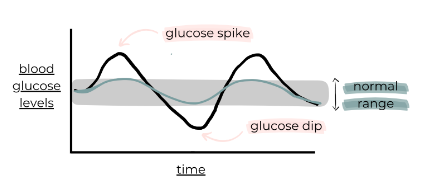
I started tracking my glucose patterns more consistently, expecting oatmeal to produce stable results. Some mornings were perfectly stable, while others showed noticeable increases; the food and timing were nearly identical, yet the outcomes were completely different.
That inconsistency made it clear that I was missing something.
The Turning Point: A Real-World Experience
Within a short time, I felt mentally sluggish, unfocused, and noticeably less sharp than usual. Later, when I checked my glucose, the pattern was clear. What I assumed was a stable meal had behaved more like a refined carbohydrate load, and it directly affected my cognitive performance during that meeting.
That experience changed how I evaluated “healthy foods.”
The Real Variable Was Not the Oatmeal Itself
The issue was not oatmeal itself, but how it was being used.
Blood glucose response is influenced by multiple factors, including food combinations, portion size, timing, and individual metabolic response. In my case, the hidden variable was what I added to the oatmeal. Ingredients like honey, dried fruit, and flavored toppings significantly altered the glucose curve, turning a relatively moderate meal into something far more aggressive.
What Actually Improved My Results
Instead of eliminating oatmeal, I adjusted my approach.
Pairing oatmeal with protein, such as eggs or unsweetened yogurt, reduced variability. Avoiding highly processed forms like instant oats improved consistency. Removing added sugars stabilized the response significantly, and controlling portion size prevented unnecessary spikes.
Oatmeal Compared to Other Breakfast Options
When used correctly, oatmeal can support stable glucose patterns.
When used without structure, it can produce results similar to high-carbohydrate meals.
The difference is not the food itself, but how it is structured.
The Core Insight
Oatmeal is not inherently safe or unsafe.
It is a structured food, and its impact depends entirely on how it is prepared, combined, and consumed.
Most people focus only on what they eat, but the real variable is how the body responds over time. That response is often invisible unless you are actively paying attention, which is why assumptions can persist for so long without being challenged.
Next in The Glucose Investor’s Lab
If oatmeal was surprising, the next one will be even more unexpected.
Final Thought
What appears stable on the surface is not always stable underneath. Blood sugar is shaped by patterns that develop over time, often without obvious signals, and understanding those patterns changes how you approach food entirely.
Disclaimer
This content is for informational purposes only and does not constitute medical advice. Individual responses may vary. Always consult a qualified healthcare professional for personalized guidance.


Comments
Post a Comment