The Glucose Investor’s Lab #3: Apple Cider Vinegar and Blood Sugar — Does It Really Work or Is It Just Another Myth?
Why Apple Cider Vinegar Became a “Blood Sugar Hack”
Apple cider vinegar and blood sugar is one of those topics that sounds almost too good to be true, and in my experience, anything that spreads that fast usually has a missing detail hidden underneath it. The promise is simple, which is exactly why people love it: drink a little vinegar before a meal, and your blood sugar stays under control. It sounds cheap, easy, and practical, especially for people who are already tired of hearing the same advice about diet, sleep, exercise, and consistency.
That is also why so many people overestimate it.
I understand the appeal because I had the same reaction at first. If something as simple as apple cider vinegar could noticeably flatten a glucose spike, it would feel like one of those rare low-effort advantages worth keeping. But blood sugar almost never works in shortcuts, and that was the first lesson this experiment forced me to relearn.
What I Expected vs What Actually Happened
When I first tried apple cider vinegar, I expected a clear, immediate, and noticeable difference, but that is not what happened. I did not see some dramatic flattening of the curve, nor did I feel like I had discovered a secret weapon that suddenly made high-carb meals harmless.
What I saw instead was much more modest.
On some meals, the rise looked slightly slower. On others, the peak seemed a little lower than expected. And on quite a few occasions, the difference was small enough that I could have missed it entirely if I had not been tracking closely. That inconsistency mattered, because it immediately told me that vinegar was not a magic trick; at best, it was a small modifier inside a much larger system.
My CGM Data Reality Check
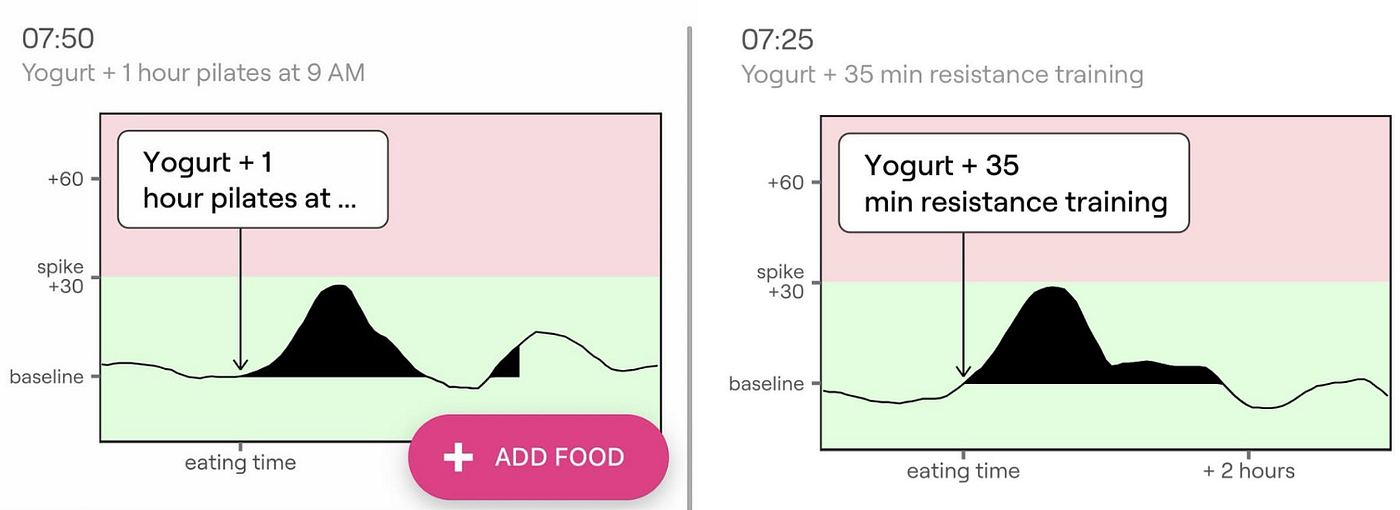
- The initial rise was sometimes slower.
- The peak was sometimes slightly lower.
- The total glucose response still occurred.
That distinction is where many people get misled. A slower rise is not the same thing as no rise, and a slightly lower peak is not the same thing as protection.
The Science of Acetic Acid: Slower Gastric Emptying and Insulin Sensitivity
Apple cider vinegar draws attention because of acetic acid, which appears to influence glucose metabolism in several modest but meaningful ways.
- Acetic acid may slow gastric emptying.
- It may slightly improve insulin sensitivity.
- It may reduce how quickly glucose enters the bloodstream after a meal.
These effects explain why some people observe a gentler glucose curve, but even when it works, the impact is subtle rather than dramatic. That subtlety is exactly what gets lost when vinegar is presented as a shortcut.
My CGM Data Proof: Why Vinegar Can’t Cancel Out a High-Carb Meal
This was the moment everything became clear.
At one point, assuming vinegar would protect me, I relaxed my discipline and allowed myself more flexibility than usual. After taking apple cider vinegar before dinner, I went ahead and ate a full plate of pasta with a piece of sweet bread, expecting at least some level of protection.
That assumption did not hold.
My CGM alarm triggered later than expected, but it still triggered, and the spike was strong enough to make the lesson impossible to ignore. There was no meaningful improvement, which made it obvious that vinegar does not override poor decisions.
That experience reset my expectations completely.
Where Apple Cider Vinegar Actually Helps
Once expectations were adjusted, vinegar became easier to understand.
- Before a higher-carb meal, it may slightly reduce the sharpness of the spike.
- With consistent use, it may support better fasting glucose over time.
- When combined with structured meals, it may help smooth the curve.
- For those already disciplined, it can act as a fine-tuning tool.
It works best as part of a system, not as a replacement for one.
What Actually Worked for Me
The real improvement came from how I used it, not from the vinegar itself.
- Dilution: About 1 tablespoon mixed with water to reduce irritation.
- Timing: Taken roughly 10 to 15 minutes before meals.
- Meal structure: Still prioritizing protein and fiber first.
- Expectation: Treated as a minor adjustment, not a solution.
That shift made the results far more consistent and easier to interpret.
Apple Cider Vinegar vs the Internet Myth
The internet version is simple: take vinegar and control blood sugar.
Reality is different.
Apple cider vinegar may slightly slow a spike and slightly reduce its peak, but it does not cancel it. The gap between expectation and reality is exactly why so many people feel disappointed.
The Core Insight
Apple cider vinegar is not a solution. It is a modifier.
If your baseline habits are weak, it does very little. If your structure is already solid, it can help refine the outcome.
Next in The Glucose Investor’s Lab
If vinegar felt overrated, the next one will challenge one of the most trusted “healthy meals.”
Final Thought
Blood sugar control is not built on shortcuts. It is built on structure, consistency, and understanding how your body actually responds over time.
Disclaimer
This content is for informational purposes only and does not constitute medical advice. Individual responses may vary. Always consult a qualified healthcare professional for personalized guidance.


Comments
Post a Comment